This week, three different fronts opened up against Google’s control over search: a federal court sided with a scraping tool over Google’s DMCA claims, major publishers started putting a number on what it would take to leave the index, and the EU issued its first fines under the Digital Markets Act. Layered underneath all of it, Alphabet’s Q2 earnings showed the growth engine behind Search easing for the first time in a year.
Search Revenue Grows 17%, But the Streak Breaks
Alphabet’s Q2 2026 earnings put Google Search & Other revenue at $63.27 billion, up 17% year over year u2014 still strong, but down from 19% growth in Q1, the first deceleration after four straight quarters of acceleration. CEO Sundar Pichai tied the growth to AI features driving query volume, while CBO Philipp Schindler credited retail-led vertical strength. Alphabet also raised its 2026 capex forecast to $195u2013205 billion, and in the earnings call Q&A, Pichai named coding and agentic coding as areas where Google still needs to catch up.
We covered the full breakdown u2014 the quarter-by-quarter growth trend, the AI Max ad story, and what it means for anyone optimizing for Google’s surfaces u2014 in a dedicated piece: Google Search Revenue Hits $63.27 Billion in Q2 2026. The short version: it’s Alphabet’s revenue, not your traffic, but the spending trajectory behind it says AI-driven search behavior is only going to get more central to how Google prices and ranks.
Court Dismisses Google’s DMCA Claims Against SerpApi
A federal judge dismissed Google’s DMCA anti-circumvention claims against SerpApi, ruling that getting past an access control isn’t copyright circumvention when the results behind it contain no copyrighted content. Claims tied to results with no copyrighted material were dismissed without room to amend; claims involving licensed images were dismissed but Google can refile within 21 days. The court did reject SerpApi’s argument that Google lacked standing to sue, and found Google plausibly alleged circumvention of its SearchGuard system u2014 so this isn’t a clean sweep either way.
This matters directly if you use, or your agency relies on, any rank tracker or SERP monitoring tool u2014 most of them depend on the same kind of automated access this ruling just protected. SparkToro’s Rand Fishkin called it a win the whole industry should be grateful for; Algorythmic’s Lily Ray flagged the more interesting follow-on question: whether this opens the door to more scraping from LLMs and tracking tools, and noisier Search Console data as a result. A single district court ruling doesn’t bind other courts, and Google can still narrow back in on the image-related claims, so treat this as a favorable data point, not a settled precedent.
Publishers Are Naming Their Price for Staying in Google Search
USA Today Co. CEO Mike Reed told Adweek the company is prepared to delist from Google Search entirely within six to twelve months. He’s not alone: The Wall Street Journal reports Reddit is reevaluating its $60 million-a-year licensing deal with Google, Politico and Reuters are considering crawler limits, and People Inc. has floated blocking Google outright as a live option.
Zyppy’s Cyrus Shepard summed up the underlying math bluntly: the traffic reward for staying indexed keeps shrinking relative to the cost. But this cuts both ways u2014 former Ad Age editor Jack Neff pointed out that if crawler-blocking spreads, AI Overviews quality could get worse as Gemini loses access to professional content to summarize. If licensing becomes the standard answer instead of free indexing, the value of being in Google’s results turns into a negotiated number rather than an assumed trade for traffic u2014 and whatever terms the biggest publishers land will likely set the floor everyone else negotiates from.
EU Hits Google With u20ac890M in First DMA Fines
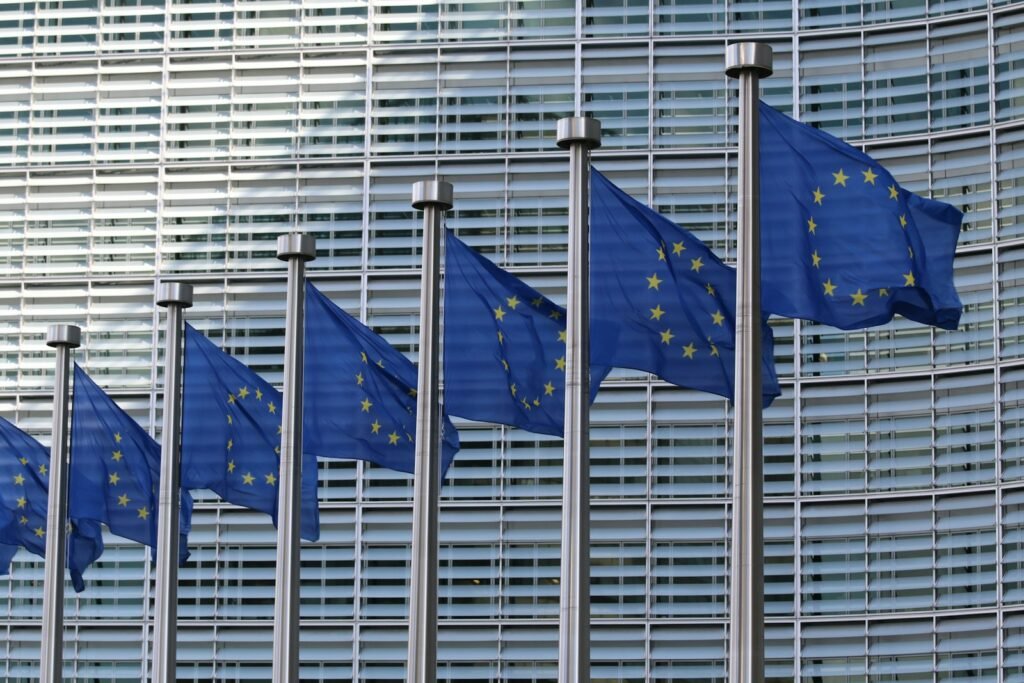
The European Commission issued its first fines against Google under the Digital Markets Act on July 23: u20ac460 million for favoring Google’s own shopping, hotel, transport, and sports results over comparable third-party services, and u20ac430 million for restricting developers from steering users to purchase options outside Google Play. This lands one week after separate binding decisions requiring Google to share anonymized search data u2014 query, click, view, and results-position data u2014 with eligible rivals, including AI chatbots that qualify as search engines, and to open Android to competing assistants.
The self-preferencing fine puts a 60-day compliance clock on how Google’s results pages are laid out in the EU, which could visibly change how third-party listings compete against Google’s own verticals there. The data-sharing requirement is the bigger long-term story: it could eventually let more search engines and AI chatbots build competitive retrieval systems on top of real Google query data, reshaping who gets cited and who gets referral traffic. Neither ruling changes rankings by itself u2014 what actually becomes visible depends entirely on how Google complies, and compliance timelines have a way of stretching.
The Pattern: Everyone Is Renegotiating With Google
Pull these threads together and they tell one story: every major counterparty in Google’s ecosystem is redrawing its terms at once. A federal court just narrowed which legal tools Google can use against companies that scrape its results. Publishers are converting their presence in the index into an active negotiation instead of an assumed trade. EU regulators are simultaneously fining how Google displays its own results and compelling Google’s data outward to competitors. And sitting on the other side of the table is a $63 billion quarter from Search, with record AI spending riding on the bet that none of this slows Google down.
None of these four stories resolve on their own this week, and none of them are isolated u2014 a scraping ruling that favors SERP tools, a publisher-leverage story, and a regulatory data-sharing mandate all point toward the same shift: more parties gaining more access to what Google’s results actually contain. Whether that access flows to competing search engines, AI chatbots, or your own tracking stack, the direction is the same. Watch the EU’s 60-day compliance window and the publisher negotiations closely u2014 both are likely to produce concrete follow-up stories well before Google’s next earnings call.