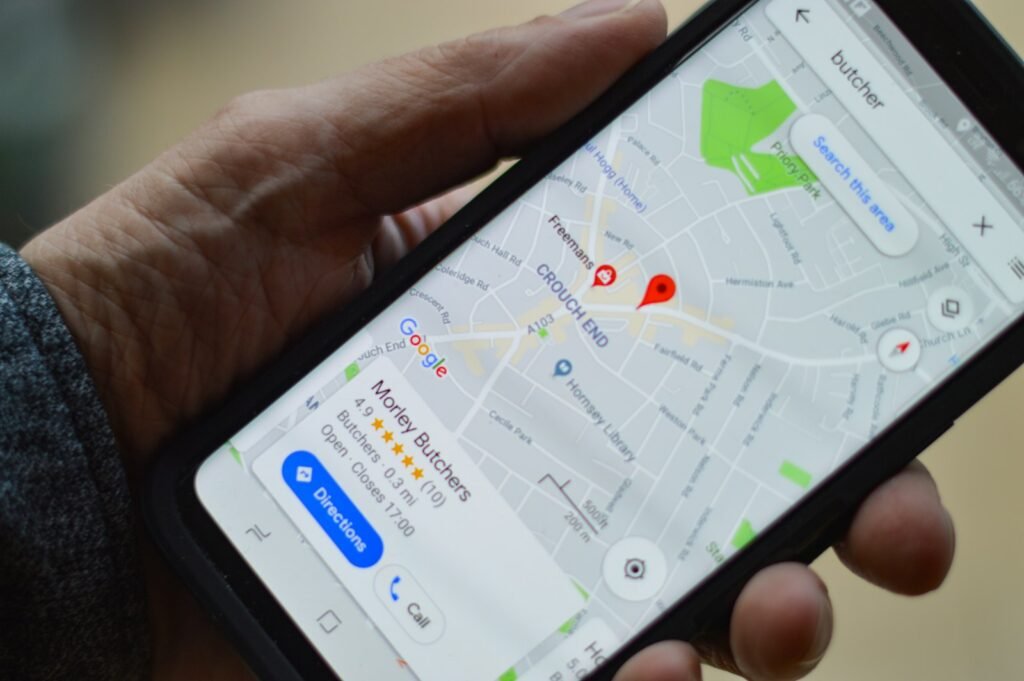
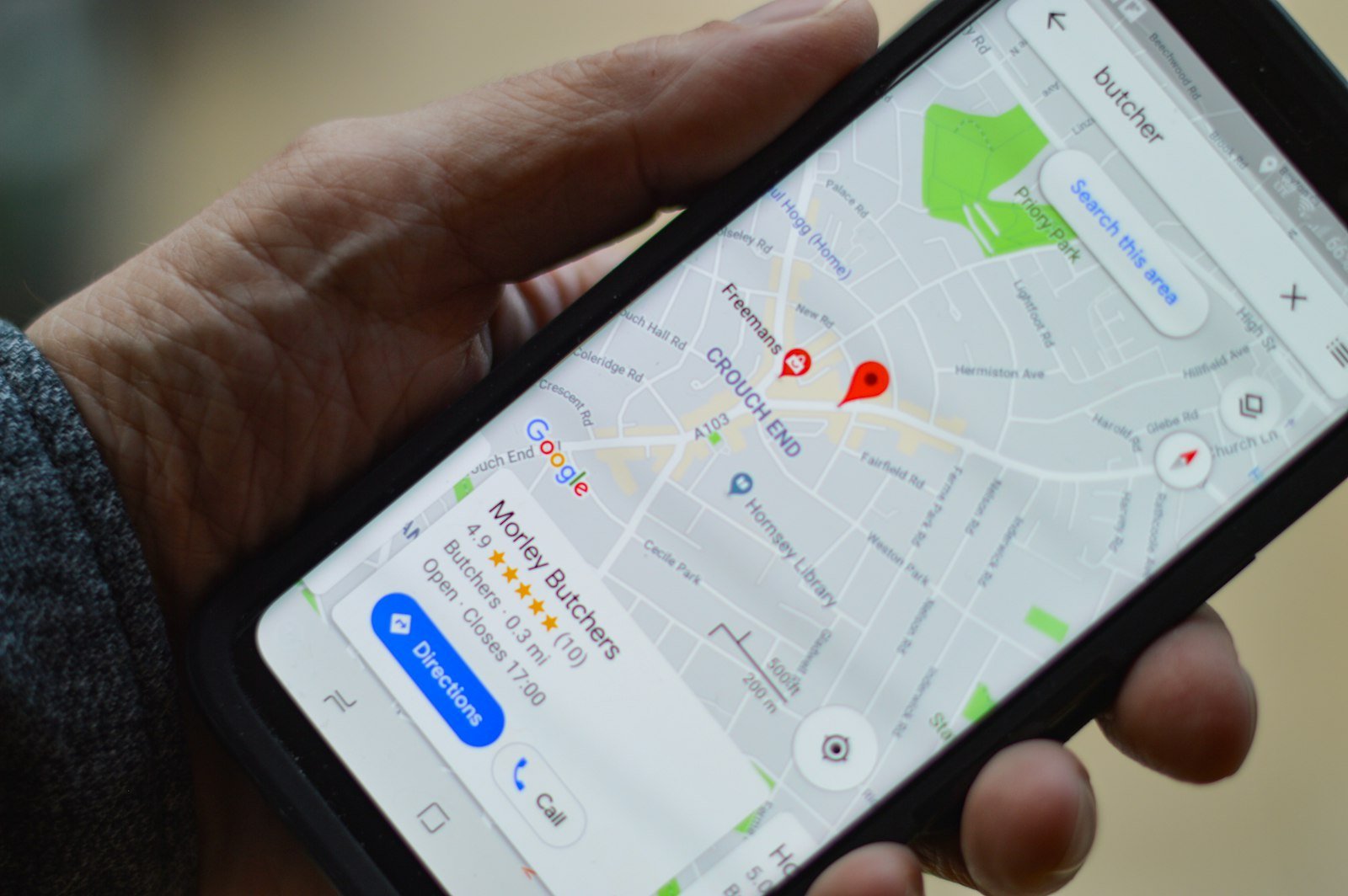
“Near me” searches have grown by more than 900% over the past several years and now carry the highest purchase intent of any local search pattern — 76% of people who search “near me” on mobile visit a business within 24 hours, and 28% complete a purchase. Those numbers are usually reported as a single global statistic. In practice, what “near me” actually returns, and how reliably it works, depends enormously on where the search happens — and Lagos and Chicago sit at opposite ends of that spectrum.
The Address Problem Lagos Has That Chicago Doesn’t
Chicago, like most US cities, runs on a standardized street address system that Google Maps, GPS, and every delivery service can parse reliably: house number, street name, city, ZIP code. Large parts of Lagos, and many other Nigerian cities, don’t have that same formal addressing coverage — buildings are commonly described by landmark (“beside the blue gate, opposite First Bank”) rather than a formal street number, especially outside the most developed commercial districts. This isn’t a minor inconvenience; it fundamentally changes what a “near me” search can reliably return, since Google’s local results depend on structured location data that simply doesn’t exist with the same consistency in many Lagos neighborhoods.
What This Means for How Businesses Show Up
- A Chicago business with an accurate Google Business Profile address will reliably show up in “near me” results for its actual physical radius
- A Lagos business may need to lean more heavily on landmark descriptions in its business description and reviews, since customers themselves are likely to search and describe location that way (“jollof spot near Ikeja City Mall” rather than a formal address)
- Pin accuracy on Google Maps matters more in Lagos specifically, since a mispinned location is harder for a customer to self-correct without a reliable formal address to fall back on

Connectivity and Data Cost Shape the Query Itself
Chicago searchers overwhelmingly search on reliable 4G/5G or WiFi, with minimal cost sensitivity to an extra search or a map reload. In Lagos, mobile data cost and connection reliability genuinely shape search behavior — searchers are more likely to get the query right the first time rather than refining through several searches, more likely to rely on cached map data, and more likely to call a business directly once they’ve found a number, rather than continuing to browse. That changes what “good” local SEO looks like: a Lagos-facing business benefits disproportionately from having its phone number prominent and one-tap-callable, since the search-to-call conversion happens faster and with less tolerance for friction.
Delivery Apps Changed “Near Me” Differently in Each City
In Chicago, “near me” for food or services often routes through Google directly to a business’s own site or Google Business Profile. In Lagos, a huge share of that same intent now routes through delivery and logistics apps (Bolt Food, Chowdeck, Glovo) rather than Google search at all — meaning a Lagos business’s presence on those platforms can matter as much as, or more than, its Google Business Profile for actually capturing “near me”-style demand.
This is a structural difference, not a preference difference: a US local SEO strategy built purely around Google Business Profile optimization transfers incompletely to Lagos, where platform presence outside Google captures a meaningful share of the same underlying intent.
What Stays the Same
The core behavioral driver — someone nearby, ready to act now — is identical in both cities, and the fundamentals (accurate hours, genuine reviews, fast page load, a phone number that works) matter in both markets. What differs is the infrastructure the search relies on and the platforms that capture the resulting intent, not the underlying human behavior driving the search in the first place.
Frequently Asked Questions
Why don’t Nigerian addresses work as well with Google Maps as US addresses?
Many Nigerian cities, including large parts of Lagos, lack the comprehensive formal street-addressing infrastructure common in US cities, so businesses and residents commonly rely on landmark-based description instead, which Google’s structured location data doesn’t capture as reliably.
Do delivery apps really matter more than Google for local search in Lagos?
For food and many retail categories, yes, a meaningful share of “near me”-type intent routes directly through platforms like Bolt Food, Chowdeck, or Glovo rather than a Google search, which is a structurally different pattern than most US cities see.
Should a business in Lagos still bother optimizing its Google Business Profile?
Yes, it still matters, especially for categories outside food delivery and for anyone specifically searching Google Maps directly, but it shouldn’t be treated as the whole local SEO strategy the way it more reasonably can be in a US market like Chicago.Want more strategies comparing US and Nigerian search behavior?
Explore more SEO Fundamentals articles.
Related Reading
Post Views: 144